

Table of Contents
- The Rider’s Power Line
- Why the Stirrup Matters
- When the Chain Breaks
- Restoring the Natural Line
- Dynamic Support for a Dynamic Sport
- Three Dimensional Motion
- The Adjustments That Matter
- Foot Position as the Foundation
- Adjusting in Practice
- Safety and Control
- Stirrup Position and Rider Biomechanics Overview
- Conclusion
- FAQs
In performance sports like alpine skiing, cycling, and powerlifting, biomechanical alignment is critical. A straight power line from the hip through the knee to the foot ensures efficient force transfer and reduces strain on joints. The same principle applies in riding, where the rider’s seat must transmit power downward into the stirrup without breaking the chain of joints or muscle groups, the stirrup position is key.
The Rider’s Power Line
When riding, energy should flow from the seat through the leg and down into the stirrup in an unbroken line. This provides stable balance and control, effective use of aids, and less strain on the body’s structures.
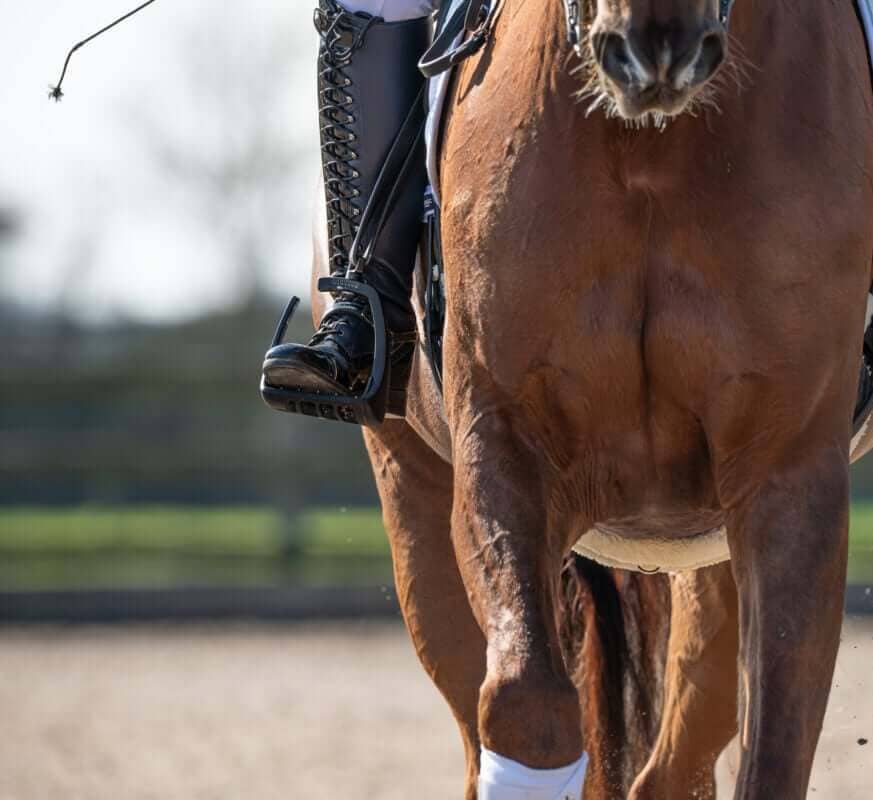
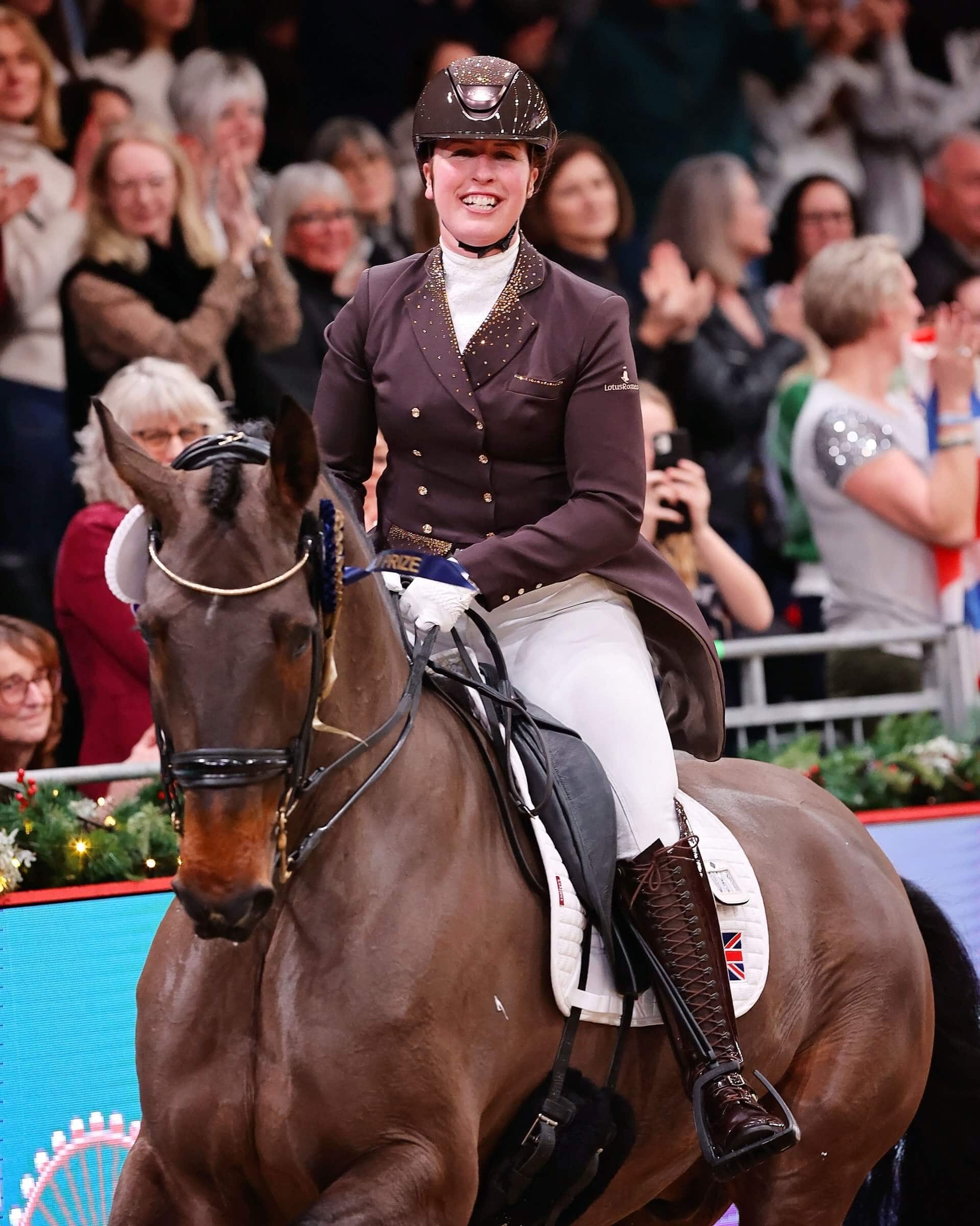
If the foot’s position in the stirrup does not support this line, for example if the stirrup leather pulls the stirrup off centre, the body starts to compensate. The most common reaction is a valgus movement. The knee falls inward, the hip loses its neutral position, and the foot bears weight at an angle.
This leads to tension in the hip flexors, a gripping leg, and reduced suppleness in the saddle.
Why the Stirrup Matters
This is where the role of the stirrup is often overlooked. The saddle’s design gets a lot of attention, but it is the stirrup that forms the rider’s base and determines how the rest of the body can organise itself.
When a rider sits correctly, a straight line forms from the hip through the knee down to the foot. This power line is foundational for balance, suppleness, and a secure seat. It determines how effectively the rider’s body can interact with the horse. Stirrup position is key.
In dressage, this becomes especially apparent. Without even force distribution through the body, the aids become jerky and unclear. In jumping, the stirrup position directly affects whether the rider can regain proper posture after a jump. Event riders working over varied terrain perhaps need this adjustability most, stirrup position is critical.
When the Chain Breaks
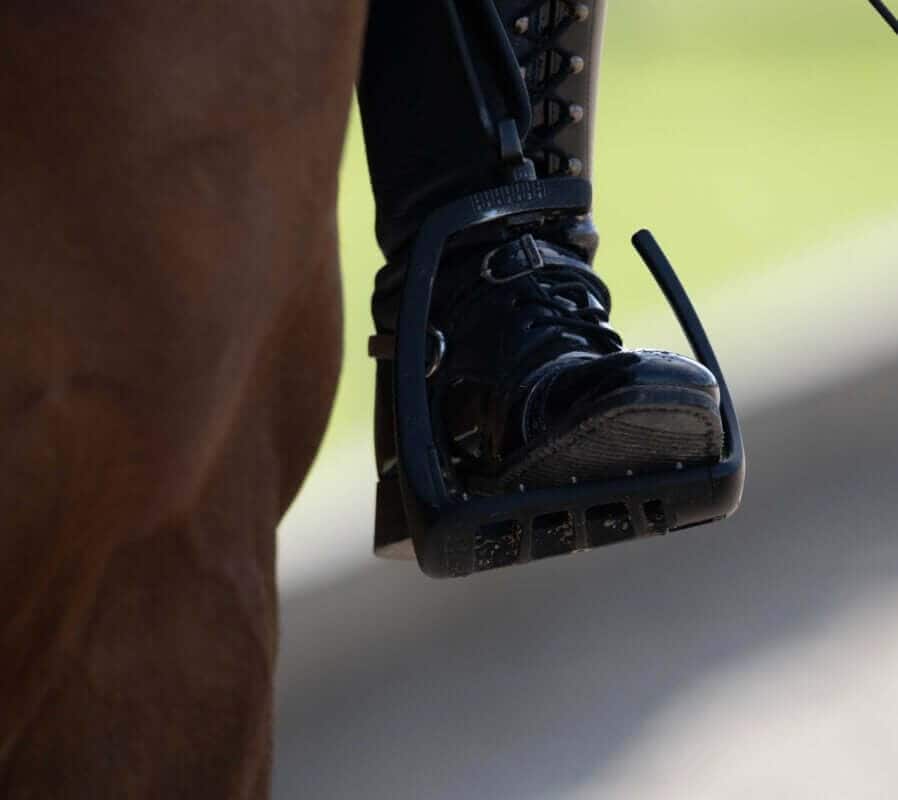
If the foot is off centre or turned out, the chain breaks. Energy meant to travel through the leg into the stirrup is lost, and the body must compensate. The knee often collapses inward, the hip locks up, and the rider begins to balance with muscles that should be relaxed.
 Stirrup Position
Many riders experience this as inner thigh tension, fatigue in the lower back, or difficulty keeping the leg still. Often, it begins with something as simple as how the stirrup hangs.
When the foot’s position follows the body’s natural lines, the ride becomes smoother, the seat stronger, and the aids clearer. The horse receives more consistent signals, and the rider has greater endurance both during the ride and over time. Stirrup position is often overlooked.
Restoring the Natural Line
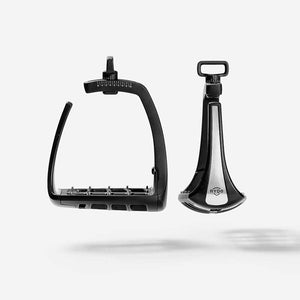
Ryde Adjustable was developed specifically to restore this natural power line. By adjusting the stirrup position to the rider’s body, the foot gets support where it is needed. Riding becomes more efficient and less fatiguing for both rider and horse.
Dynamic Support for a Dynamic Sport
Riding is not static. The horse is always moving, and the rider must respond with small, precise adjustments to stay in balance. From lateral work to transitions, groundwork to jumping, the seat must be both stable and supple.
The stirrup is not just a footrest. It is the rider’s base in every movement and the body’s most important contact point for balance and control. When the base is correctly set, the body can follow the horse without resistance. If it is crooked or rigid, tension travels from ankle to neck.
Adjusting the Stirrup to the Rider
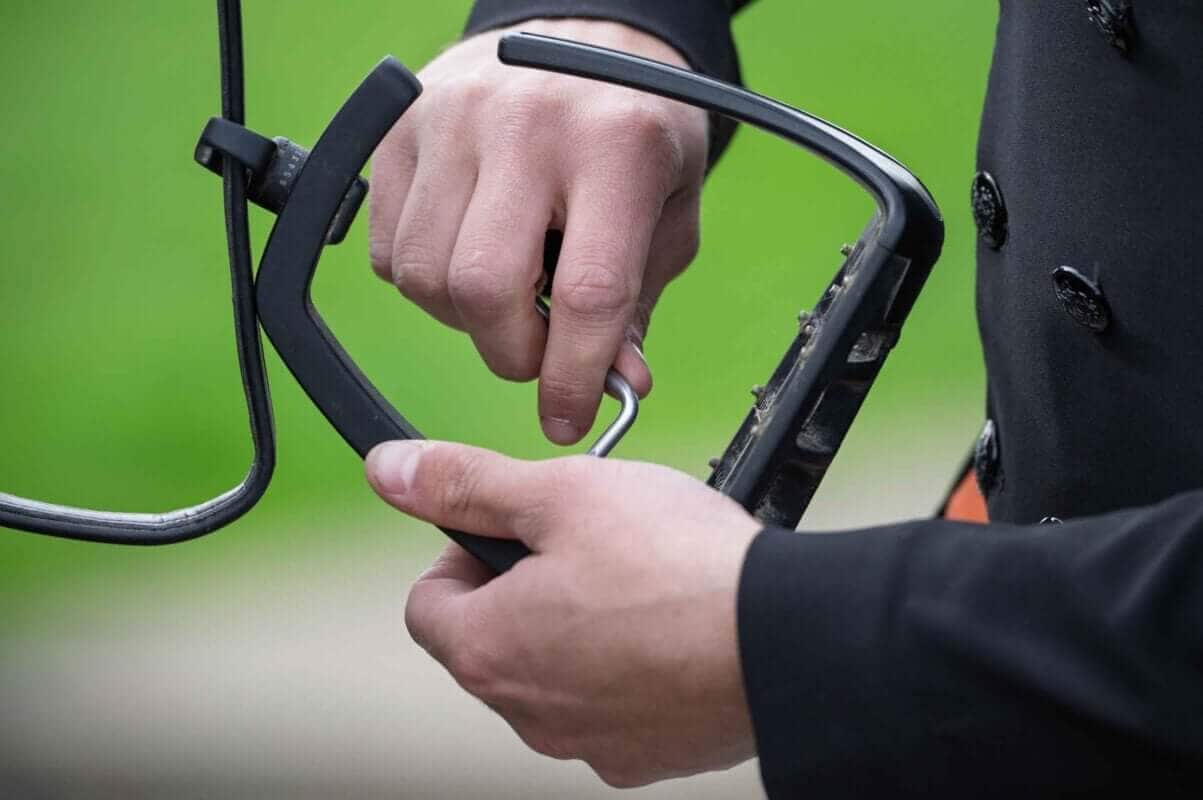
This allows the rider to adjust the stirrup to their own anatomy, fine tune the setup based on discipline and movement, and find a balance point that follows the body’s motion.
When the settings are right, the difference is immediate. The body responds more quickly, the rider feels secure and carries themselves without tensing or clinging. The nervous system receives clearer signals about body position, reducing tension and improving reaction time. The result is better rhythm, precision, and communication with the horse.
Three Dimensional Motion
In transitions, canter leads, and jumping, the foot must rapidly support the rider’s weight while still allowing movement. The stirrup must provide both support and flexibility at the right moments.
A common problem is the foot slipping off centre over the stirrup, or pressure falling to the outside. This causes the leg to slide back, the knee to collapse inward, and the rider loses contact when it is most needed.
With adjustable tilt and angle, the pressure point of the foot lands where the rider needs it. This reduces the risk of losing the stirrup or losing body awareness mid movement. It is not about locking the foot in place, but creating a stable base that allows movement without compromising balance.
The Adjustments That Matter
Ryde Adjustable offers three individually customisable settings, each designed to optimise the seat, reduce tension, and increase rider control.
Lateral Adjustment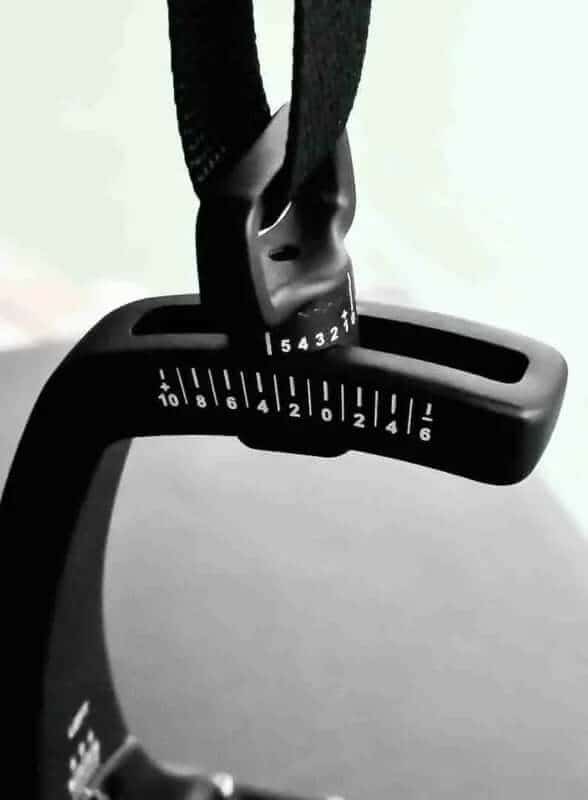 Stirrup Position - Rotational Lateral Adjustment
Stirrup Position - Rotational Lateral AdjustmentTraditional stirrups hang at an angle, which pushes the foot outward. This causes the leg to rotate inward, the knee to collapse, and the foot to rest on the outside of the plate.
With adjustable lateral positioning, the stirrup can instead be aligned directly under the hip. This allows the leg to hang naturally, the knee to stabilise, and the rider to find a balanced leg.
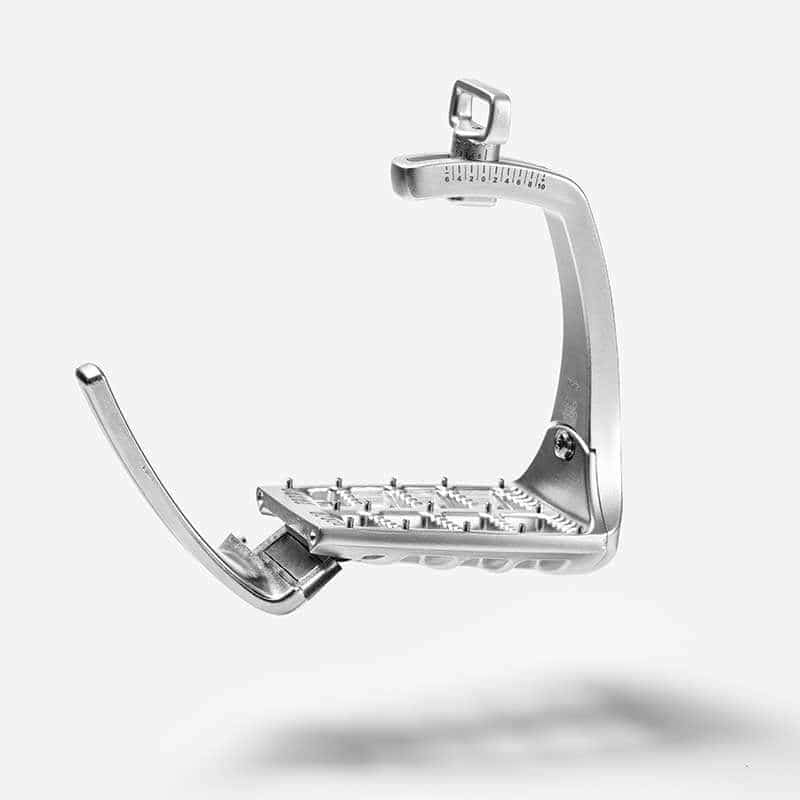
Stirrup Leather Angle
Every body is different. Some riders have more hip rotation, others asymmetry from past injuries. With a fixed leather, the body is forced to adapt.
By adjusting the stirrup leather angle, the rider can create alignment that matches their body. This reduces pressure and improves relaxation and precision.
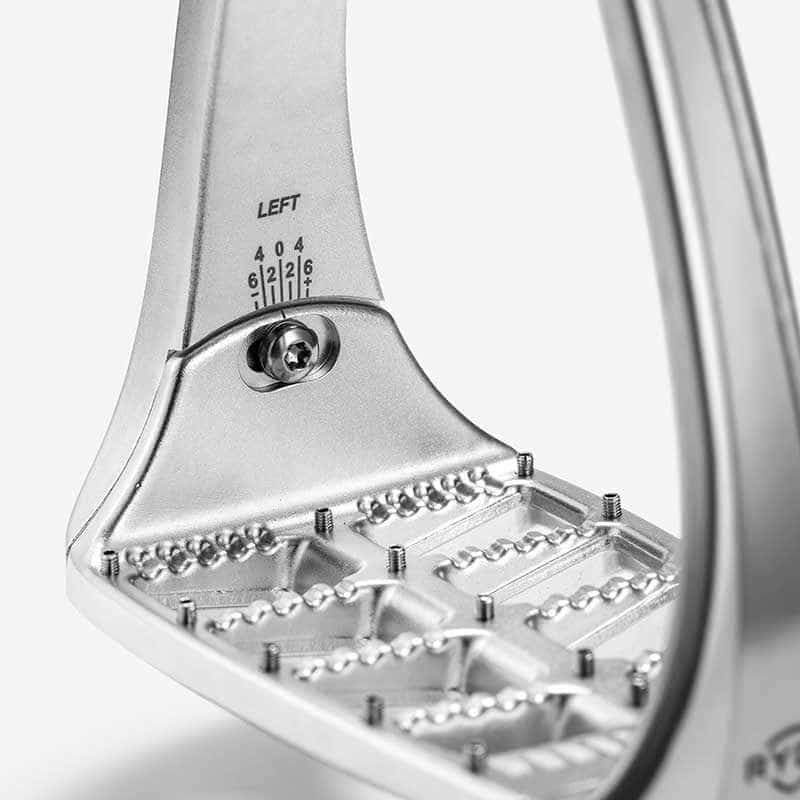 Stirrup Position - Plate AdjustmentTread Angle
Stirrup Position - Plate AdjustmentTilting the plate forward shifts weight toward the heel, giving a deeper and more secure seat. Tilting it back activates the forefoot and increases reactivity.
The differences are subtle but immediately noticeable. By fine tuning the tilt, the body finds a reliable reference point and balance improves.
Foot Position as the Foundation
Before adjusting stirrup settings, it is crucial to begin with foot placement. Many riders unknowingly place only the toe on the stirrup, which creates an unstable seat and compensatory tension.
Instead, the weight should rest just behind the ball of the foot in the forefoot arch. When the foot lies correctly, pressure is evenly distributed, the leg stabilises without gripping, and the heel sinks naturally. This improves communication with the horse and creates a more sustainable position.
Adjusting in Practice
Start where you are. Let your legs hang freely, then pick up the stirrups and feel. Does the foot rest evenly. Is the stirrup hanging straight from the hip. Is the leg falling naturally.
If something feels tense or uneven, adjust the lateral position, leather angle, or tread tilt. Test one change at a time and feel it in motion, especially in canter or jumping.
Safety and Control
Safety in the saddle starts with balance. When the foot slips or the centre of gravity shifts, milliseconds determine whether the rider recovers or falls.
A well adjusted stirrup improves stability, keeps the rider centred, and allows faster reactions. This builds confidence for both rider and horse.
Stirrup Position and Rider Biomechanics Overview
Correct stirrup position in horse riding directly affects alignment, balance, and performance. The table below shows how small changes in setup can transform the rider’s position and effectiveness.
| Element | Incorrect Setup | Correct Setup | Impact on Riding |
|---|---|---|---|
| Foot Position | Toe on stirrup or too deep | Just behind the ball of the foot | Improves stability and control |
| Stirrup Alignment | Pulled off centre | Directly under the hip | Restores balance and symmetry |
| Knee Position | Falls inward | Tracks naturally forward | Reduces tension and improves stability |
| Hip Position | Locked or rotated | Neutral and mobile | Allows better movement with the horse |
| Weight Distribution | Uneven or on outside edge | Even across the foot | Improves contact and rider security |
| Leg Function | Gripping or unstable | Relaxed and supportive | Creates clearer, more effective aids |
| Balance | Compensated and tense | Centred and fluid | Enhances overall performance |
| Safety | Slower reactions | Faster recovery and control | Reduces risk of imbalance or falls |
Conclusion
The stirrup is often underestimated, yet it plays a central role in rider balance, comfort, and performance.
When the foot is correctly aligned, the rest of the body follows. The seat becomes softer, the aids clearer, and the overall ride more effective.
Small adjustments in stirrup position can create significant improvements in both feel and function. When equipment supports the rider’s natural biomechanics, riding becomes more efficient, more consistent, and more sustainable over time.
For riders who want to explore this further, you can learn more about how adjustable stirrups support alignment and performance here:
Ryde Adjustable Stirrups
This is where real progress begins, in the details.
FAQs
What is the correct stirrup position in riding?
The correct stirrup position places the foot just behind the ball of the foot, with the weight evenly distributed and the heel able to sink naturally. The stirrup should hang in line with the hip, allowing a straight alignment from hip to knee to foot for optimal balance and control.
Why does my knee fall inward when riding?
A knee that falls inward is often caused by poor stirrup alignment. When the stirrup pulls the foot off centre, the leg rotates inward and the hip loses its neutral position. This creates tension and instability, often leading to gripping with the leg instead of a relaxed, balanced seat.
Where should your foot sit in the stirrup?
Your foot should rest in the forefoot arch, just behind the ball of the foot. Placing the foot too far forward on the toe creates instability, while placing it too deep reduces mobility. Correct placement allows for even pressure, better balance, and clearer aids.
How do stirrups affect rider balance?
Stirrups form the rider’s base of support. If they are correctly aligned, they allow the body to stay balanced and follow the horse’s movement. If they are misaligned, the rider compensates with tension in the leg, hip, or back, reducing stability and control.
How can I improve my balance in the saddle?
Improving balance starts with correct alignment. Ensuring the stirrup sits under the hip, the foot is properly placed, and the leg hangs naturally allows the rider to stabilise without gripping. Small adjustments in stirrup position can significantly improve overall balance and feel.
Are adjustable stirrups worth it?
For many riders, the issue is not effort or ability, but alignment. Traditional stirrups are fixed, meaning the rider has to adapt their body to the equipment, often leading to tension, imbalance, and long term compensation patterns.
Adjustable stirrups change that completely. By allowing the stirrup to match the rider’s natural biomechanics, they restore correct alignment through the hip, knee, and foot. This creates a more stable base, reduces unnecessary strain, and allows the rider to sit, move, and react more effectively.
The difference is often immediate. Riders feel more balanced without gripping, more secure without stiffness, and more connected to the horse. Over time, this leads to improved performance, greater comfort, and more consistent communication.
For riders looking to progress, refine their position, or resolve persistent issues in the saddle, adjustable stirrups are not just a marginal gain. They are a fundamental upgrade in how the body works with the horse.